Other Common Names: Coral cactus, jumping cholla, Cholla
Synonyms: Cylindropuntia fulgida
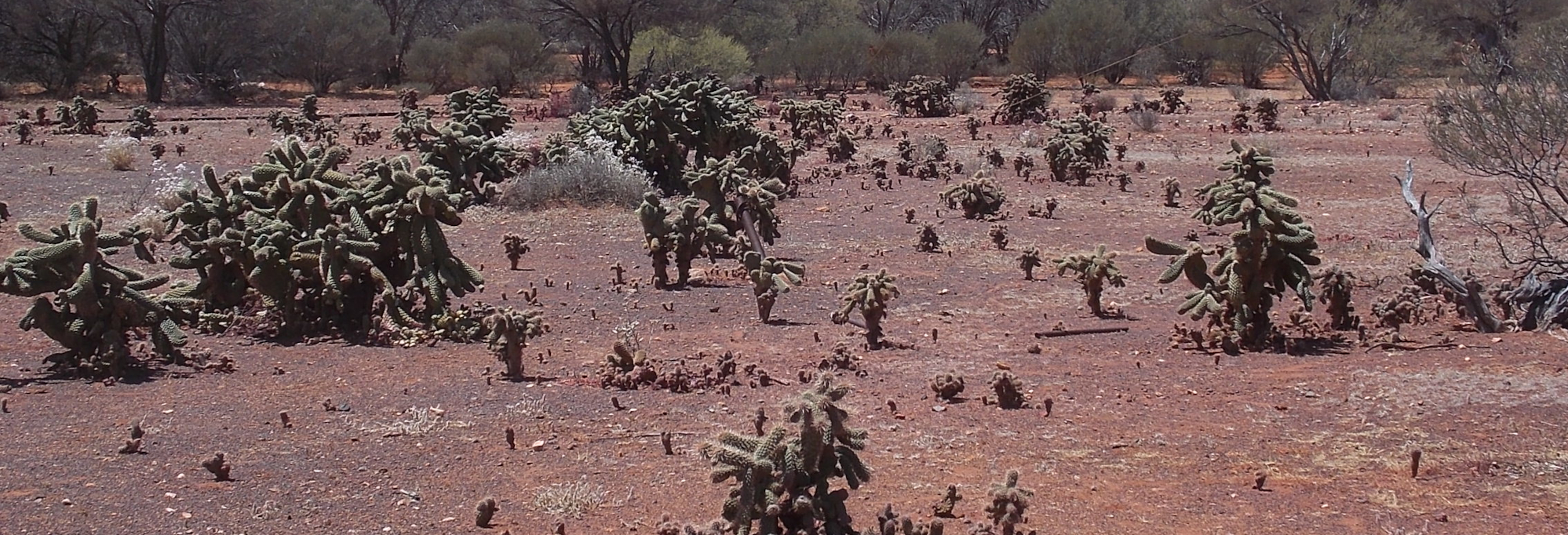

Cylindropuntia fulgida var. mamillata


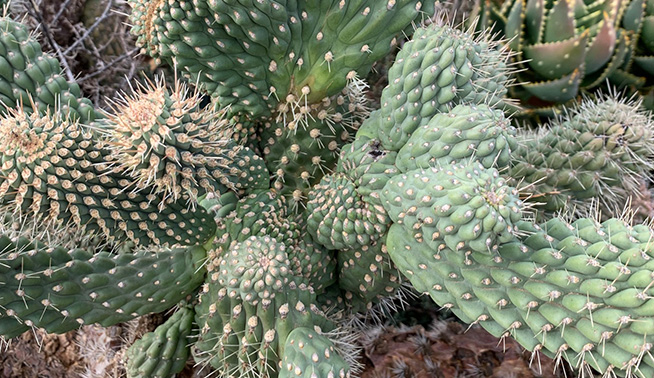
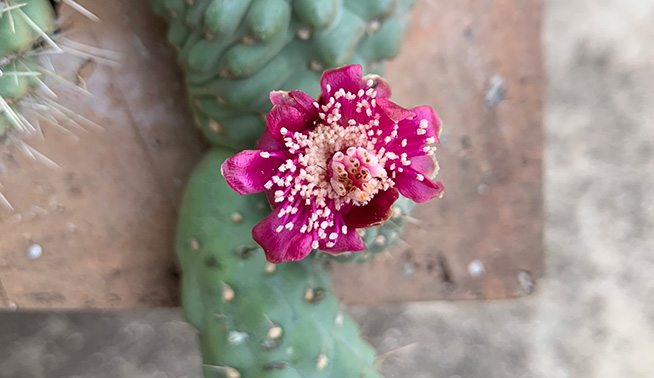
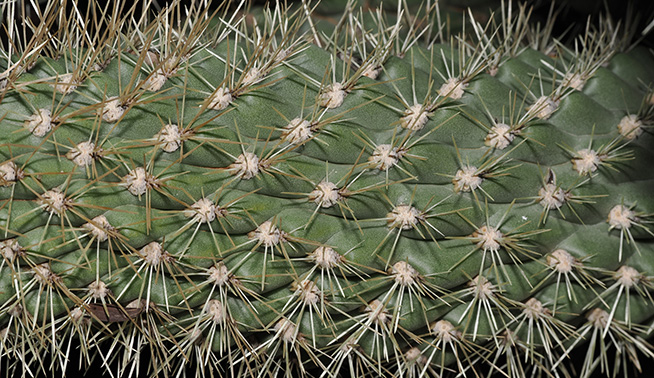
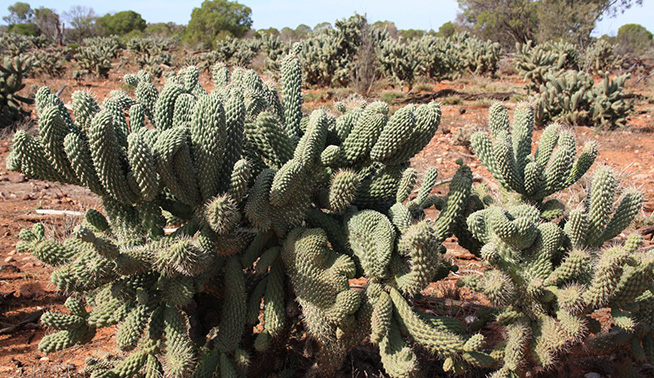
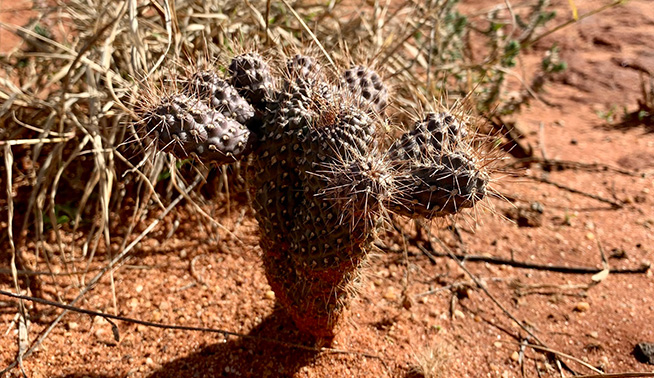
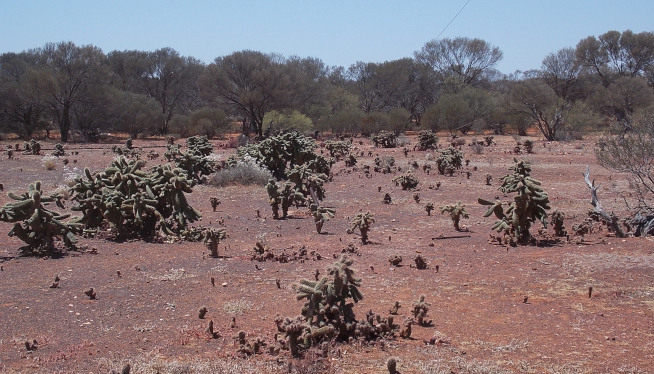
Cactus in Australia are extremely challenging to control. In all situations considerable care is required to prevent injury from spines and spreading to new areas.
Physical or mechanical removal using hand-digging or excavators is possible, however care needs to be taken to burn or deeply bury all loose segments / mature plants after removal, given the cactus’s ability to withstand extreme heat and drought. Removal from the soil alone will not kill it. Physical removal (hand-digging) in dense infestations is hazardous, as the barbed spines can become lodged in the skin and cause infection, or create scratches and gashes.
Glyphosate is reportedly ineffective, and best results are achieved using a formulation of 300g/L Triclopyr and 100gL Picloram at a rate of 500 mL per 100 L of water. A plant-based spraying oil should also be used to allow the herbicide to run down the spines onto the pads. A spray dye allows any missed pads to be easily seen.
For plants large enough to have a stem, Amitrole (250 g/L) + Ammonium thiocyanate (220 g/L) can be injected 1 mL into cuts at 3 cm spacing.
MSMA (monosodium methyl arsenate) is affective against boxing glove cactus, but can only be applied by registered herbicide contractors.
Good weed hygiene will reduce the spread as pads easily attached to vehicles, machinery, livestock or wildlife. Managers could install fencing around infestation sites and keep livestock and machinery away. Vehicles and machinery traveling through infestation sites are advised to check for attached cactus segments and thoroughly clean down tyres and undercarriage before entering and leaving the site.
Wildfires are rarely intense enough to kill mature plants, however deliberate burns with the use of fuel to increase temperature and intensity will kill both mature plants and fallen segments. The burn area must be monitored and any remaining cacti or segments collected and either re-burned or deeply buried (using an excavator) to prevent any surviving pieces re-rooting.
Biological control using cochineal insects is an extremely effective management technique for this species. There is a species of cochineal insect (Dactylopius tomentosus) which has evolved specifically to feed on cacti including boxing glove cactus. The cochineal was widely distributed from 2016 by regional biosecuirty groups and is having variable impact.
LSID number: [51432839] | full LSID: [https://id.biodiversity.org.au/taxon/apni/51432839] | field_lsid: [] | taxon: ["Cylindropuntia fulgida var. mamillata"]
ALA Reference
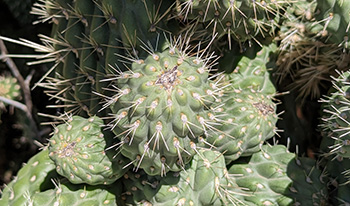
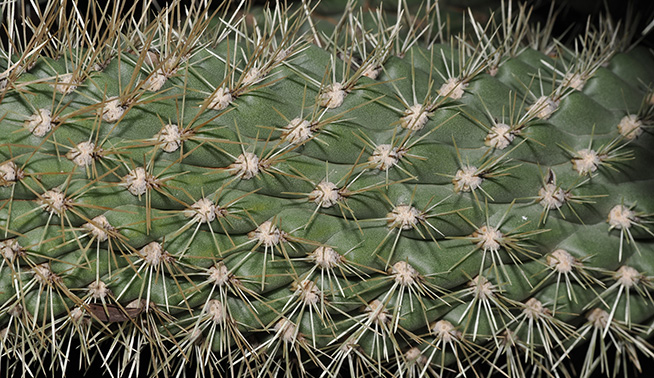
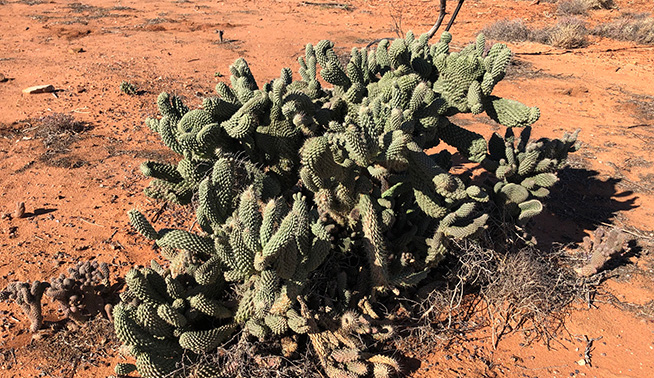
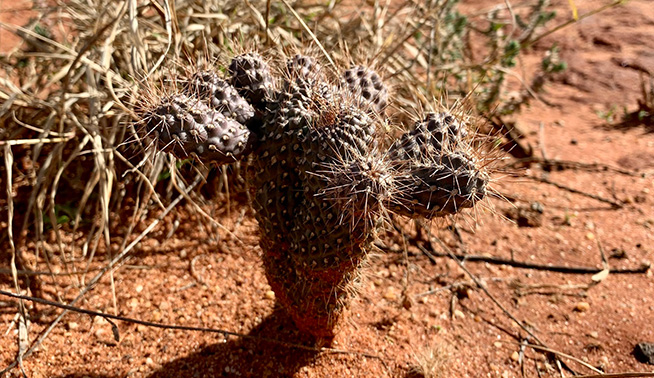
 Balandrán-Quintana, R. R., González-León, A. et al (2018)
An overview of Cholla (Cylindropuntia spp.) from Sonora, Mexico. Journal of the Professional Association for Cactus Development, 20, 162–177.
Jones, P. K., Day, M. D., McConnachie, A. J., Holtkamp, R. H., Conroy, J., Pidgeon, G., Clark, E., Clark, P., Fletcher, A., & Savage, M. (2023)
The successful biological control of Cylindropuntia fulgida var. Mamillata (A. Schott ex Engelm.) Backeb. (Cactaceae) (coral or boxing glove cactus) at two field sites in Queensland, Australia. Biological Control, 182, 105235.
Klein, H. (2014)
Boxing-glove cactus (Cylindropuntia fulgida var. Mamillata forma monstrosa) (Cactaceae). Agricultural Research Council.
Lloyd, S. & Reeves, A. (2014)
Situation Statement on Opuntioid Cacti (Austrocylindropuntia spp., Cylindropuntia spp. And Opuntia spp.) in Western Australia. Western Australian Agricultural Authority.
NSW Weedwise (2025)
Boxing glove cactus (Cylindropuntia fulgida var. mamillata)
Potter, S. & Sheehan, M. R. (2017).
Opuntioid Cacti Management Guide: Best practice information for Austrocylindropuntia, Cylindropuntia and Opuntia species in Australia. Department of Primary Industries and Regional Development.
The State of Queensland (2025). Coral Cactus. Queensland Government.
Coral Cactus. Queensland Government.
Western Australian Herbarium (1998–)
Florabase—the Western Australian flora. Department of Biodiversity, Conservation and Attractions
Balandrán-Quintana, R. R., González-León, A. et al (2018)
An overview of Cholla (Cylindropuntia spp.) from Sonora, Mexico. Journal of the Professional Association for Cactus Development, 20, 162–177.
Jones, P. K., Day, M. D., McConnachie, A. J., Holtkamp, R. H., Conroy, J., Pidgeon, G., Clark, E., Clark, P., Fletcher, A., & Savage, M. (2023)
The successful biological control of Cylindropuntia fulgida var. Mamillata (A. Schott ex Engelm.) Backeb. (Cactaceae) (coral or boxing glove cactus) at two field sites in Queensland, Australia. Biological Control, 182, 105235.
Klein, H. (2014)
Boxing-glove cactus (Cylindropuntia fulgida var. Mamillata forma monstrosa) (Cactaceae). Agricultural Research Council.
Lloyd, S. & Reeves, A. (2014)
Situation Statement on Opuntioid Cacti (Austrocylindropuntia spp., Cylindropuntia spp. And Opuntia spp.) in Western Australia. Western Australian Agricultural Authority.
NSW Weedwise (2025)
Boxing glove cactus (Cylindropuntia fulgida var. mamillata)
Potter, S. & Sheehan, M. R. (2017).
Opuntioid Cacti Management Guide: Best practice information for Austrocylindropuntia, Cylindropuntia and Opuntia species in Australia. Department of Primary Industries and Regional Development.
The State of Queensland (2025). Coral Cactus. Queensland Government.
Coral Cactus. Queensland Government.
Western Australian Herbarium (1998–)
Florabase—the Western Australian flora. Department of Biodiversity, Conservation and Attractions
| JAN | FEB | MAR | APR | MAY | JUN | JUL | AUG | SEP | OCT | NOV | DEC | Notes | |
|---|---|---|---|---|---|---|---|---|---|---|---|---|---|
| Active growth | |||||||||||||
| Flowering | |||||||||||||
| Fruiting | |||||||||||||
| Dormant |
| JAN | FEB | MAR | APR | MAY | JUN | JUL | AUG | SEP | OCT | NOV | DEC | Notes | |
|---|---|---|---|---|---|---|---|---|---|---|---|---|---|
| Mechanical removal | |||||||||||||
| Foliar spray | |||||||||||||
| Biological Control |


